


The difference between planetary and cycloidal reducer gearbox
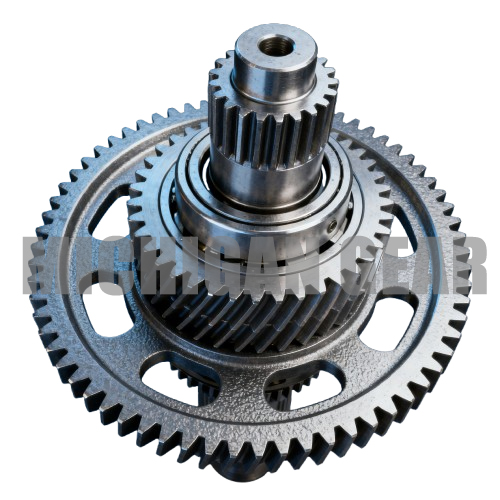
You face a choice between planetary gearbox and cycloidal reducer gearbox based on your specific needs. Planetary gearboxes offer compact, efficient solutions for high torque, while cycloidal gearbox designs handle higher reduction ratios and shock loads. The following table shows where precision gearboxes and gearboxes excel across industries:
| Application Area | Key Drivers | Industry Impact |
|---|---|---|
| Robotics | Industrial automation, healthcare, logistics | Demand for precision and torque in robotic systems |
| Machine Tools | Accurate motion control, high torque | Growth in automotive, aerospace, metalworking |
| Conveyors | Automated material handling | Boost in logistics, warehousing, manufacturing efficiency |
| Packaging Machinery | Efficient, reliable machinery for packaged goods | Growth in e-commerce, packaged product consumption |
Key Takeaways
● Cycloidal gearboxes excel in applications requiring high precision and low noise, making them ideal for robotics and automation.
Key Differences
Cycloidal Reducer Gearbox vs Planetary Gearboxes
When you compare cycloidal gearboxes and planetary gearboxes, you notice clear differences in how each type performs and fits into your application. Cycloidal gearboxes use a unique rolling motion that allows for very high positional accuracy and minimal backlash. Planetary gearboxes, on the other hand, rely on multiple gears working together to distribute the transmitted torque. This design makes planetary gearboxes compact and efficient, but they often have higher backlash and noise levels.
You will find that cycloidal gearboxes excel in applications where you need high precision, durability, and quiet operation. These gearboxes handle shock loads well and require less maintenance over time. Planetary gearboxes offer a good balance of size and efficiency, making them popular in automation and general industrial uses. However, they may not match the precision or durability of cycloidal gearboxes in demanding environments.
Feature Comparison
To help you choose the right gearbox, consider the following comparison table. It highlights the main features that set cycloidal gearboxes apart from planetary gearboxes:
| Feature | Cycloidal Gearboxes | Planetary Gearboxes |
|---|---|---|
| Reduction Ratio | 30:1 to over 300:1 | 3:1 to 10:1 |
| Torque Capability | Transmit very high torques with high precision | Distribute load among multiple gears, lower forces per gear |
| Movement Precision | Higher, very high positional accuracy | Lower |
| Durability | Higher | Lower |
| Maintenance | Lower | Higher |
| Noise Level | Lower | Higher |
| Contact Surfaces | Higher | Lower |
| Backlash | Less | More |
| Efficiency | Comparable to planetary gearboxes, varies by conditions | High, varies by conditions |
| Physical Dimensions | Compact, robust | Compact, longer axial length |
Cycloidal Reducer Gearbox Mechanism
How Cycloidal Gearboxes Work
You will notice that cycloidal gearboxes use a unique mechanism to deliver high performance. Inside the cycloidal reducer gearbox, an input shaft drives a set of eccentric shafts. These shafts move a cam disk in a cycloidal motion. The cam disk has one cam section less than the ring of rollers, which creates continuous rolling contact. This design reduces friction and ensures smooth power transmission.
Here is a table that breaks down the main components and their roles:
| Mechanism | Description |
|---|---|
| Eccentric Shafts | Drive the cams in sync, ensuring smooth motion transmission. |
| Cam Design | Fewer cam sections than rollers, which reduces backlash. |
| Integrated Bearings | Large angular contact ball bearings absorb high bending moments. |
| Precision and Rigidity | High torsional rigidity and low wear for long-lasting performance. |
This rolling contact design allows cycloidal gearboxes to absorb up to 250% higher bending moments than similar-sized planetary gearboxes. You benefit from better precision and positioning accuracy, which is essential for robotics and automation.
Performance and Precision
Cycloidal gearboxes stand out for their ability to deliver true zero backlash and high torque density. The rolling motion cancels out clearance, so you get ultra-low or zero backlash. This feature is critical when you need accurate, repeatable positioning.
You will also find that cycloidal gearboxes handle shock loads and overloads better than other types. The integrated angular contact ball bearings increase resistance to both axial and radial loads, which boosts durability and reliability.
If you work in demanding environments, the SMM Cycloidal Reducer offers extra advantages. It uses high-quality 316L stainless steel for corrosion resistance and features an explosion-proof structure. This makes it ideal for oil, chemical, robotics, and AGV applications. You can rely on stable operation, even under heavy-duty conditions.
Tip: Choose a cycloidal reducer gearbox when you need high precision, durability, and safety in harsh environments.
Planetary Gearboxes Mechanism
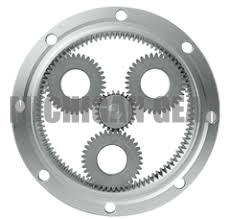
How Planetary Gears Work
When you look inside a planetary gearbox, you see a central sun gear, several planet gears, and an outer ring gear. The sun gear sits in the center and drives the planet gears, which rotate around it. These planet gears mesh with both the sun gear and the ring gear, creating a compact and efficient system. This arrangement allows multiple gears to engage at once, which increases torque output and distributes the load evenly.
The swiping motion of the planet gears around the sun gear helps reduce wear and keeps the system running smoothly. You benefit from a compact design that fits well in tight spaces. The longer axial length of planetary gearboxes can be an advantage when you need to fit the gearbox into narrow machinery.
| Aspect | Description |
|---|---|
| Torque Output | Multiple gears engage at once, boosting torque. |
| Load Distribution | Even load sharing reduces wear and increases durability. |
| Efficiency Rate | Single-stage systems often reach over 90% efficiency. |
| Compact Design | Fits into space-limited applications. |
Performance and Usability
You will find that planetary gearboxes offer high efficiency and robust performance. The low backlash and high rigidity make them suitable for applications where you need precise, repeatable motion, such as robotics and CNC machines. These gearboxes handle heavy loads and frequent directional changes with ease.
Common uses for planetary gearboxes include:
● Automotive transmissions and electric vehicles
You will appreciate the ease of assembly and maintenance, but you should pay attention to alignment and lubrication. Regular inspections and proper oil changes help keep your planetary gearbox running smoothly.
Tip: Choose planetary gearboxes when you need a balance of efficiency, compactness, and reliable torque for a wide range of industrial and automation tasks.
Pros and Cons
Cycloidal Gearboxes Advantages and Disadvantages
When you choose cycloidal gearboxes, you gain several important benefits. The unique rolling motion of these gearboxes gives you high precision and repeatability. You can rely on them for applications that demand accurate movement, such as robotics and automation. The design spreads the load across many contact points, which increases durability and allows the cycloidal reducer gearbox to handle high loads. You also benefit from minimal angular backlash, which means you get smooth and accurate power transmission.
Here is a quick overview of the main advantages:
| Advantage | Description |
|---|---|
| High Precision | You achieve accurate power transmission with almost no backlash. |
| Longevity | The robust design and low friction extend the service life of these gearboxes. |
| Load Distribution | The load spreads over a large area, which boosts durability and load capacity. |
You will find cycloidal gearboxes especially useful in advanced industrial settings where you need both robustness and efficiency. However, you should know that the complex internal structure can make maintenance more challenging. The high manufacturing precision required for components like the swivel arm bearing may also limit speed and power in some cases.
Note: Cycloidal gearboxes are ideal for high-precision, high-load, and repeatable tasks, but they may require specialized maintenance knowledge.
Planetary Gearboxes Advantages and Disadvantages
Planetary gearboxes offer you a compact design and efficient gear reduction. You can use planetary gears in many industrial and automation applications because they provide reliable torque and fit into tight spaces. These gearboxes distribute the load among several gears, which helps reduce wear and increase durability. You will also notice that planetary gearboxes often have high efficiency, making them cost-effective over time.
However, you should consider some limitations. The complexity of planetary gears increases manufacturing costs. Precision alignment is critical; if you do not align the gears properly, you may see imbalances and faster wear. The compact design can also make heat dissipation difficult, especially in high-speed applications, so you may need extra cooling.
● Planetary gearboxes require more frequent maintenance than some other gearboxes.
Applications
Cycloidal Gearboxes in Industry
You will find cycloidal gearboxes in industries where precision, durability, and reliability are essential. These gearboxes handle high torque and shock loads, making them a top choice for demanding environments. The cycloidal reducer gearbox stands out in sectors that require zero backlash and long service life. The SMM Cycloidal Reducer, for example, delivers explosion-proof and corrosion-resistant performance, which is critical for oil and chemical plants.
Here is a table showing where cycloidal gearboxes excel and what each industry demands:
| Industry | Operational Requirements |
|---|---|
| Heavy Machinery | High torque handling, durability, safety compliance |
| Renewable Energy | Compact design, robustness, energy yield improvements |
| Medical Equipment | Low backlash, high positional accuracy |
| Aerospace | High reliability, resistance to extreme conditions |
| Robotics | Precision control, reliability, reduced error rates |
| Mining | Durability, long-lasting components |
You can rely on cycloidal gearboxes for robotics, AGVs, and automation systems. These gearboxes provide the accuracy and repeatability you need for robotic arms and automated guided vehicles. In oil and chemical industries, cycloidal gearboxes offer strong load-bearing capacity and withstand harsh conditions.
Note: Cycloidal gearboxes outperform other types in applications that demand high precision and minimal maintenance.
Planetary Gearboxes in Industry
You will see planetary gearboxes used in a wide range of automation and industrial applications. Their compact design and high torque density make them suitable for both large-scale factories and small DIY projects. You can use planetary gearboxes in AGVs, wheel drives, slew drives, winch drives, and track drives. They also work well in mixers, pumps, and cutter heads.
Common scenarios for planetary gearboxes include:
● Collaborative robots and robotic arms
Choosing the Right Gearbox
Selection Factors
When you select gearboxes for your application, you must consider several important factors. Precision, torque, durability, maintenance, and space constraints all play a role in your decision. The following table highlights how cycloidal and planetary gearboxes compare on these key points:
| Selection Factor | Cycloidal Gearboxes | Planetary Gearboxes |
|---|---|---|
| Firmness/Compactness | 70% net volume saving and substantial weight reduction | Compact but longer axial length |
| Maintenance | Zero maintenance due to fewer elements used | Higher maintenance due to more components |
| Overload Capacity | Can withstand loads up to 500% of rated torque | Distributes load among multiple gears |
| Input Power | Lower input powers required | Higher input power may be needed |
| Precision | Can achieve accuracies of less than 1′ | Good, but typically higher backlash |
You should also think about torque and durability. Torque lets your gearbox drive heavy loads. Durability ensures your gearboxes last through tough conditions. Material choice and gear geometry both affect how well your gearboxes perform and how long they last. Effective lubrication keeps everything running smoothly.
Space constraints matter, especially in robotics and AGVs. Compact gearboxes save space and reduce weight. Lightweight, high-strength materials help you meet both space and durability needs.
Application-Based Recommendations
You need to match your gearbox choice to your industry. For oil and chemical sectors, cycloidal gearboxes offer explosion-proof and corrosion-resistant features. Robotics and AGV applications benefit from compact, high-precision gearboxes with low maintenance. Planetary gearboxes work well in automation, wind energy, and heavy machinery where gear reduction and efficiency are priorities.
Tip: Always align your gearbox selection with your operational needs for precision, torque, durability, and available space. This approach ensures optimal performance and long-term reliability.
You must compare practical features before choosing a gearbox. The table below highlights key differences:
| Feature | Cycloidal Reducer Gearbox | Planetary Gearbox |
|---|---|---|
| Precision | Higher | Lower |
| Durability | Higher | Lower |
Match your gearbox type to your application’s load, speed, and industry needs for reliable performance.
FAQ
What makes cycloidal gearboxes suitable for harsh environments?
You get explosion-proof and corrosion-resistant features. These gearboxes handle flammable gases and corrosive media, making them ideal for oil, chemical, and heavy-duty industrial settings.
How do planetary gearboxes compare in terms of maintenance?
You will need more frequent maintenance for planetary gearboxes. Their multiple moving parts require regular inspection and lubrication to ensure reliable operation.
Can I use cycloidal reducers in robotics and AGVs?
Yes. You benefit from high precision, compact size, and low backlash. Cycloidal reducers deliver accurate motion control for robotic arms and automated guided vehicles.
Post time: Dec-09-2025