


Helical gear systems offer smooth operation and high efficiency but also present challenges like increased manufacturing costs and potential axial thrust. The table below shows the most commonly cited advantages and disadvantages:
| Advantages | Disadvantages |
|---|---|
| Smoother and Quieter Operation | Higher Manufacturing Costs |
| Greater Load-Carrying Capacity | Potential Axial Thrust and Bearing Wear |
Key Takeaways
●Helical gears provide smooth and quiet operation, making them ideal for applications where noise control is essential.
●These gears can handle higher loads due to their design, which allows multiple teeth to engage simultaneously, increasing durability.
●While helical gears are efficient, they come with higher manufacturing costs and require special bearings to manage axial thrust.
Helical Gear Advantages
Smooth and Quiet Operation
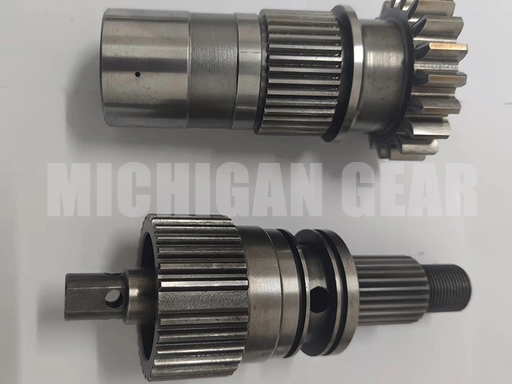
Helical gear systems are known for their smooth and quiet performance. The angled teeth allow for gradual engagement, which reduces vibration and noise. This feature makes them ideal for environments where noise control is important, such as automotive transmissions and industrial machinery.
Noise Reduction Facts:
●Helical gears provide a noise reduction of 10-20 dB compared to spur gears.
●At speeds between 1,000 and 3,000 RPM, noise drops by 10-15 dB.
●At speeds above 3,000 RPM, noise reduction can reach up to 20 dB.
The following table shows the mechanisms that contribute to smoother operation:
| Mechanism | Contribution to Smooth Operation |
|---|---|
| Gradual Tooth Engagement | Engagement starts at a single point and progresses across the tooth face, allowing 2-3 teeth to be in contact at once. |
| Continuous Load Transfer | As one tooth pair disengages, the next begins engagement, ensuring overlapping load transfer and reducing shock loading. |
| Higher Contact Ratios | Helical gears have a contact ratio of 2.0-3.0, compared to 1.2-1.6 for spur gears, leading to smoother torque transmission. |
| Effective Thrust Load Management | The angled teeth help distribute wear evenly and maintain lubrication, reducing noise and vibration during operation. |
High Load Capacity
Helical gear designs allow for multiple teeth to be in contact at the same time. This feature distributes the load more evenly, which increases the gear’s ability to handle higher forces and torque. The gradual engagement of the teeth helps absorb shocks and reduces stress on individual teeth.
| Gear Type | Typical Load Capacity | Key Factor |
|---|---|---|
| Spur Gear | Lower | Instantaneous, full-face contact |
| Helical Gear | Higher | Gradual, distributed contact |
Helical gear systems are often chosen for heavy-duty applications because they can manage greater loads without excessive wear.
Efficient for Non-Parallel Shafts
Helical gear sets can transmit power between shafts that are not parallel. This flexibility allows engineers to design compact machinery layouts. Helical gears typically achieve efficiency levels between 98% and 99%, which is only slightly lower than spur gears. The design also ensures smoother torque transmission and reduced vibration.
●Crossed helical gears are ideal for transmitting power between non-parallel, non-intersecting shafts.
●They offer layout flexibility, allowing for compact designs in machinery.
●Best suited for light-duty applications such as small mechanisms, instrumentation drives, or auxiliary motion transfer.
Durability and Long Life
Helical gear systems are built to last. The gradual engagement and distribution of load across multiple teeth reduce wear and tear. Under standard industrial conditions, helical gears typically last between 20,000 and 50,000 hours. Some specialized units can exceed 100,000 hours.
●Excavators: 5-7 years
●Bulldozers: 4-6 years
●Cranes: 6-8 years
●Mining Equipment: 3-5 years
●Agricultural Machinery: 7-9 years
This durability makes helical gear a reliable choice for equipment that operates continuously or under heavy loads.
Better Tooth Engagement
The angled teeth of a helical gear allow for gradual engagement, which improves power transfer and reduces stress concentrations. This design minimizes noise and vibration while enhancing load distribution across the tooth surface. Optimizing the geometry of gear tooth profiles, such as modifying tooth flank curvature and pressure angles, can significantly enhance gearbox efficiency. These improvements lead to reduced friction and better power transmission by ensuring that gear teeth engage more effectively.
Tip: Better tooth engagement means less wear and longer service life for the gear system.
The gradual engagement of helical gear teeth means that the load is distributed across multiple teeth simultaneously, unlike straight-cut gears where one or two teeth handle the entire load. This distribution allows helical gears to manage greater loads and extend their service life.
Helical Gear Disadvantages
Axial Thrust
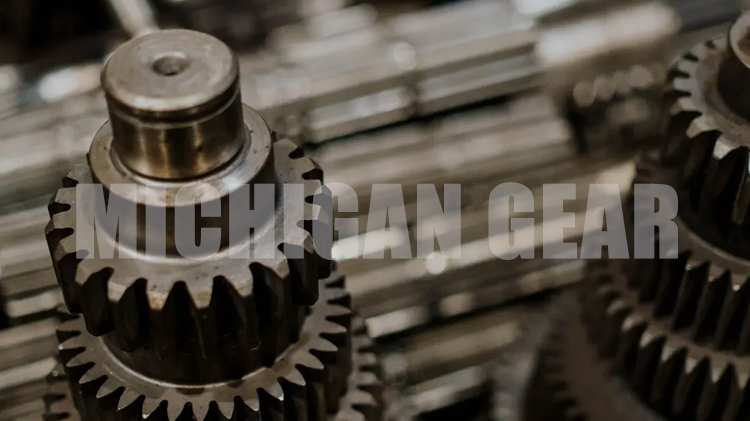
Helical gear systems produce axial thrust because their teeth are cut at an angle. This force pushes the gears along the axis of rotation. Axial thrust increases as the helix angle becomes steeper. Unlike spur gears, which have straight teeth and do not generate axial thrust, helical gear designs require careful management of this force.
| Gear Type | Axial Thrust Generation |
|---|---|
| Helical | Generates axial thrust due to angled teeth. |
| Spur | Does not generate axial thrust; teeth are parallel. |
Axial thrust affects several aspects of gear system design:
●It impacts bearing selection and gear alignment.
●Proper management prevents gear misalignment and increased wear.
●Excessive axial thrust can cause noise, vibration, and premature bearing failure.
Helical gear systems impose both radial and axial forces on bearings, making the design more complex. Engineers must select bearings that can handle these combined loads to ensure reliable operation.
Higher Manufacturing Cost
Manufacturing helical gear requires more advanced processes than spur gears. The angled teeth demand specialized tools and high-precision equipment. This complexity leads to higher production costs.
| Gear Type | Manufacturing Process Complexity | Cost Difference |
|---|---|---|
| Spur Gears | Simple, straight teeth | Lower costs |
| Helical Gears | Complex, angled teeth | 30-40% higher costs |
Several factors contribute to the increased cost:
1.The tooth surfaces have an inclined angle, making the process more complicated.
2.Specialized tools and high-precision machines are needed.
3.Helical gear systems often use higher quality materials and special heat treatments.
4.The manufacturing cycle is longer, with more steps and technical requirements.
These factors make helical gear a more expensive choice for many applications.
Power Loss Potential
Helical gear systems are efficient, but they can experience power losses due to friction and axial thrust. The efficiency of helical gear usually ranges from 98% to 99%. However, the need for thrust bearings to manage axial forces can introduce additional friction, reducing overall efficiency.
| Factor | Impact on Efficiency | Explanation |
|---|---|---|
| Meshing | Very High | Smooth, gradual engagement minimizes impact losses. |
| Friction | Minor Loss | Sliding contact along the tooth face generates heat. |
| Axial Thrust | Major Loss | Requires thrust bearings, which add significant friction. |
Power losses mainly come from tooth friction and lubrication churning. These losses can affect the performance of the gear system, especially in high-speed or heavy-duty applications.
Special Bearings Needed
Helical gear systems require special bearings to handle the axial loads created by the angled teeth. Tapered roller bearings are commonly used because they can support both radial and axial forces. These bearings are often arranged in pairs to counteract thrust in both directions.
| Bearing Type | Description |
|---|---|
| Tapered Roller Bearings | Designed to handle heavy radial and axial loads simultaneously. |
| Arrangement in Pairs | Commonly arranged back-to-back or face-to-face to counteract thrust in both directions. |
Special bearing designs increase the complexity and cost of the gear system. Engineers must carefully select and install these bearings to ensure proper load sharing and precise axial control.
Increased Maintenance
Helical gear systems generally require less frequent maintenance than spur gears because their gradual tooth engagement reduces wear. However, maintenance issues can still arise, especially if the system is not properly managed.
| Maintenance Issue | Causes | Consequences |
|---|---|---|
| Gear Wear | Insufficient lubrication, Contaminated oil, Overloading | Gear pitting, reduced efficiency, gearbox damage |
| Bearing Damage | Misalignment, Excessive load, Poor lubrication | Vibration, abnormal noise |
| Lubrication Problems | Low oil level, Oil contamination, Incorrect viscosity | Increased friction, rapid wear of components |
| Improper Installation | Shaft misalignment, Loose mounting bolts, Incorrect coupling | Vibration, overheating, mechanical failure |
Common maintenance issues include gear wear, bearing damage, lubrication problems, and improper installation. Regular inspection and proper lubrication help prevent these problems and extend the life of the gear system.
Tip: Routine maintenance and careful installation are essential for reliable helical gear operation.
Application Suitability
When to Use Helical Gears
Helical gears work best in situations where smooth and quiet operation is important. Many industries rely on these gears for their ability to handle high loads and reduce vibration. Engineers often select helical gears for machinery that runs for long hours or needs reliable performance.
| Industry | Reason for Use |
|---|---|
| Automotive | Durability and load capacity in demanding applications |
| Robotics | High efficiency and reliability in automated systems |
| Aerospace | Strength and reliability in flight systems |
| Mining | Handling heavy loads and continuous operation |
| Industrial Automation | Efficient operation in automated machinery |
| Construction | High durability and load capacity |
| Power Generation | Efficiency and reliability in energy systems |
Key factors to consider include tooth profile optimization, material selection, and engineering calculations. Choosing the right material and heat treatment improves gear lifespan and reliability. Advanced tools like finite element analysis help simulate stress and fatigue, guiding better design choices.
Tip: Helical gears are ideal when you need smooth power transfer, high torque, and reduced noise.
When to Choose Other Gears
Spur gears or bevel gears may be better options in certain scenarios. These gears suit applications where cost, space, or maintenance are top priorities.
●Operating speeds remain below 1,000 RPM
●Noise and vibration are acceptable trade-offs
●Budget constraints are primary drivers (30-40% cost savings)
●Maximum efficiency (99%+) is required for energy-sensitive applications
●Axial space is limited and thrust bearings cannot be accommodated
●Simple maintenance with standard radial bearings is preferred
Worm gears offer advantages in hoists and lifts because they can self-lock and provide large speed reductions. Helical gears deliver higher efficiency and easier maintenance compared to worm gears, but worm gears operate more quietly under heavy loads.
Choosing the right gear type depends on shaft layout, torque requirements, duty cycle, space limitations, and efficiency priorities.
Helical gears offer smooth operation and high load capacity, but they require special bearings and cost more. Engineers should weigh these factors:
●Application needs like speed and torque
●Load capacity and efficiency
●Space and design limits
●Material strength
●Noise control
●Maintenance
| Advantages of Helical Gears | Disadvantages of Helical Gears |
|---|---|
| High-speed applications | More complex manufacturing |
| Significant power transmission | Higher axial thrust |
| Noise reduction | Increased cost |
Selecting the right gear involves balancing material choices and geometric design. Classifying gears by shaft orientation helps engineers match gear types to system requirements.
FAQ
What makes helical gears quieter than spur gears?
Helical gears have angled teeth. These teeth engage gradually, which reduces noise and vibration. Machines with helical gears often run much more quietly.
Do helical gears need special lubrication?
Yes. Helical gears require high-quality lubrication. This helps reduce friction and wear caused by sliding contact between the angled teeth.
Can helical gears handle more load than spur gears?
Helical gears can carry heavier loads. Multiple teeth share the force at once, which spreads out the pressure and increases strength.
Post time: Mar-17-2026