


Gears are the unsung heroes of mechanical engineering, serving as the backbone of countless machines—from the smallest wristwatch to massive industrial turbines. These precision components transmit motion and power between rotating shafts, enabling controlled speed, torque, and direction changes that make modern technology possible. However, the term “gear” encompasses a wide range of designs, each tailored to specific applications. One common source of confusion is distinguishing between “traditional gears” and “spur gears.” While many assume these are separate categories, the reality is more nuanced: spur gears are a specific type of traditional gear, but not all traditional gears are spur gears. In this blog, we will break down the key differences between the two, explore their unique characteristics, and clarify how they fit into the broader landscape of gear technology.
First, it is critical to define our terms clearly, as ambiguity in terminology often leads to misunderstanding. Let’s start with traditional gears. The phrase “traditional gears” refers to the classic, time-tested gear designs that have been used for centuries—long before advanced manufacturing techniques like CNC machining or 3D printing. These gears are characterized by their mechanical simplicity, reliance on basic geometric principles, and widespread use in conventional machinery. Traditional gears are not limited to a single design; instead, they include a variety of types that have evolved to meet different mechanical needs. Examples of traditional gears include spur gears, bevel gears, worm gears, helical gears, and planetary gears. What unites them is their core function: using toothed surfaces to mesh with other gears and transfer rotational motion. In short, traditional gears are a broad category that encompasses most gear types we encounter in everyday and industrial settings.
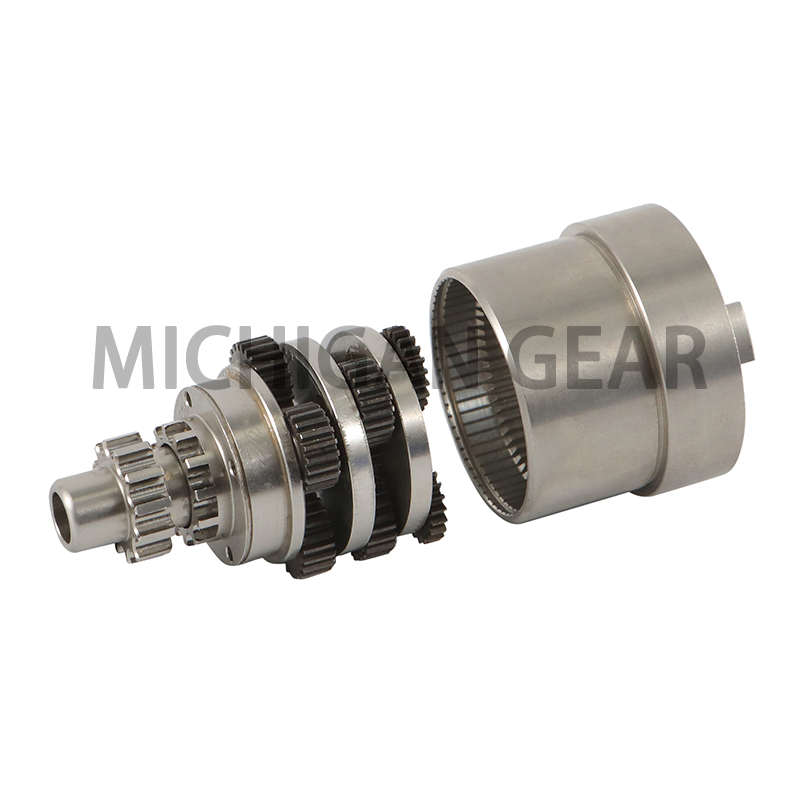
In contrast, spur gears are a specific subset of traditional gears—arguably the simplest and most recognizable type. A spur gear is defined by its straight, parallel teeth that run along the length of the gear’s cylindrical body, parallel to the gear’s axis of rotation. This straightforward design is what sets spur gears apart from other traditional gear types and makes them one of the oldest and most widely used gear designs in history. Unlike helical gears (another traditional gear type) with angled teeth or bevel gears with conical shapes, spur gears have a flat, disk-like appearance with teeth that project radially outward in a straight line. This simplicity not only makes them easy to design and manufacture but also ensures they operate with minimal complexity, though it also comes with certain tradeoffs.
The most fundamental difference between traditional gears and spur gears lies in their scope: traditional gears are a broad category, while spur gears are a specific type within that category. However, there are more nuanced differences when we compare spur gears to other types of traditional gears, as well as differences in their performance, applications, and design considerations. Let’s explore these differences in detail to gain a deeper understanding.
One key difference is in their tooth geometry and meshing mechanism. As mentioned, spur gears have straight teeth that are parallel to the gear’s axis. When two spur gears mesh together, their teeth make contact along a line that is parallel to both shafts. This line contact results in a sudden, impactful engagement when the teeth first meet, which can produce noise and vibration—especially at high speeds. In contrast, other traditional gears have different meshing characteristics. For example, helical gears (a traditional gear type) have teeth that are cut at an angle to the gear’s axis, creating a helical shape. When two helical gears mesh, their teeth make contact along a diagonal line, resulting in a gradual, smooth engagement that reduces noise and vibration. Bevel gears, another traditional type, have conical bodies with teeth cut along the cone’s surface, allowing them to transmit motion between shafts that intersect at an angle (usually 90 degrees), whereas spur gears are designed for parallel shafts only.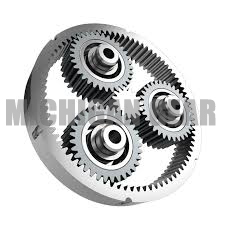
Performance differences are another critical distinction. Spur gears excel in applications that require simplicity, cost-effectiveness, and moderate power transmission. They have high efficiency (typically 95-98%) when operating at moderate speeds, as their straight teeth minimize friction and energy loss. However, their line contact and sudden engagement limit their performance at high speeds or under heavy loads, as the impact forces can cause premature wear, noise, and even tooth failure. Other traditional gears, such as helical gears or planetary gears, are better suited for high-speed, high-torque applications. Helical gears, for example, have a larger contact area between teeth, distributing the load more evenly and reducing stress, making them ideal for industrial machinery like pumps, compressors, and turbines. Planetary gears, a more complex traditional design, offer high torque density and precise speed control, making them popular in automotive transmissions and robotics.
Manufacturing complexity and cost also set spur gears apart from other traditional gears. Spur gears are the easiest to manufacture due to their simple straight-tooth design. They can be produced using basic machining
processes like hobbing, shaping, or milling, even with conventional equipment. This simplicity translates to lower production costs, making spur gears the go-to choice for applications where cost is a primary concern, such as consumer appliances, toys, and basic machinery. In contrast, other traditional gears require more complex manufacturing processes. Helical gears, for instance, require specialized hobbing machines to cut the angled teeth, increasing production time and cost. Bevel gears, with their conical shape and curved teeth, require precision grinding to ensure proper meshing, further driving up costs. Worm gears, another traditional type, have a unique screw-like design that requires specialized cutting tools, making them even more expensive to produce.
processes like hobbing, shaping, or milling, even with conventional equipment. This simplicity translates to lower production costs, making spur gears the go-to choice for applications where cost is a primary concern, such as consumer appliances, toys, and basic machinery. In contrast, other traditional gears require more complex manufacturing processes. Helical gears, for instance, require specialized hobbing machines to cut the angled teeth, increasing production time and cost. Bevel gears, with their conical shape and curved teeth, require precision grinding to ensure proper meshing, further driving up costs. Worm gears, another traditional type, have a unique screw-like design that requires specialized cutting tools, making them even more expensive to produce.
Application diversity is another area where the difference between spur gears and other traditional gears becomes apparent. Spur gears are primarily used in applications with parallel shafts, moderate speeds, and light to moderate loads. Common examples include household appliances (washing machines, dryers), power tools, bicycles, and simple industrial conveyors. Their simplicity and low cost make them ideal for these everyday uses. Other traditional gears, however, are designed for more specialized applications. Bevel gears, for example, are used in applications where shafts intersect, such as automotive differentials, hand drills, and marine propulsion systems. Worm gears are used when a large speed reduction is needed with minimal space, such as in garage door openers, winches, and elevators. Planetary gears are used in high-performance applications like automotive transmissions, aerospace systems, and robotics, where precise control and high torque are essential.
It is also important to note that while spur gears are a type of traditional gear, the term “traditional gears” can sometimes be used to refer to older, less advanced designs compared to modern gear technologies (such as precision gears with advanced materials or coatings). However, in the context of this discussion, we use “traditional gears” to refer to classic gear designs that have stood the test of time—including spur gears—distinguishing them only by their specific design characteristics and applications.
In summary, the key difference between traditional gears and spur gears is that traditional gears are a broad category of classic gear designs (including spur, helical, bevel, worm, and planetary gears), while spur gears are a specific, simple type of traditional gear with straight, parallel teeth. Spur gears are defined by their simplicity, low cost, and suitability for moderate-speed, moderate-load applications with parallel shafts. Other traditional gears, such as helical, bevel, and planetary gears, offer more advanced performance characteristics (smoother operation, higher torque, better speed control) but come with increased complexity and cost. Understanding these differences is crucial for engineers, designers, and anyone working with mechanical systems, as it ensures the right gear type is chosen for each application—maximizing efficiency, durability, and cost-effectiveness.
Gears may be small, but their impact on modern technology is immeasurable. Whether it’s the simple spur gear in your bicycle or the complex planetary gear system in your car’s transmission, each gear type plays a unique role in keeping our world moving. By understanding the distinctions between traditional gears and their specific subtypes like spur gears, we can appreciate the ingenuity behind these mechanical wonders and make more informed decisions when designing or maintaining machinery.
Post time: Feb-02-2026