


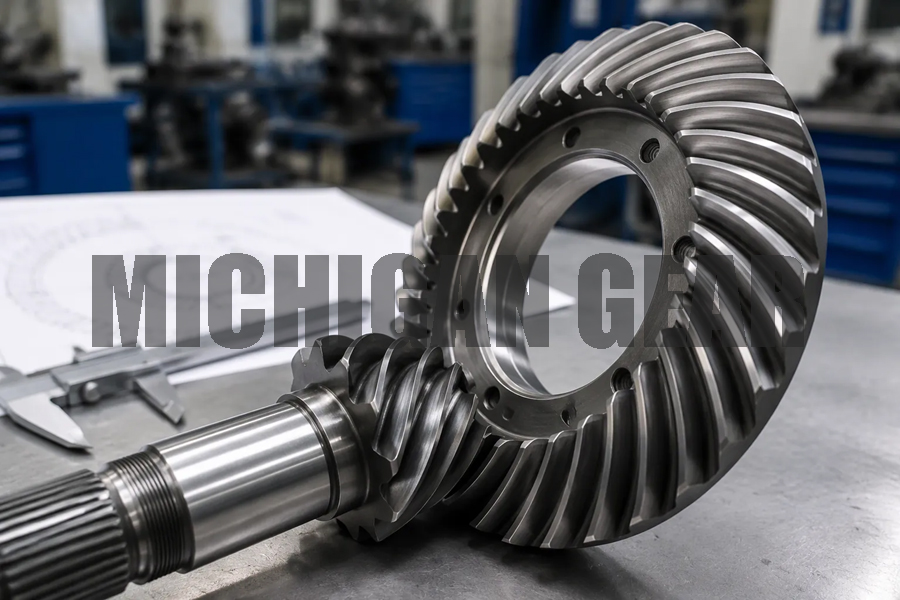
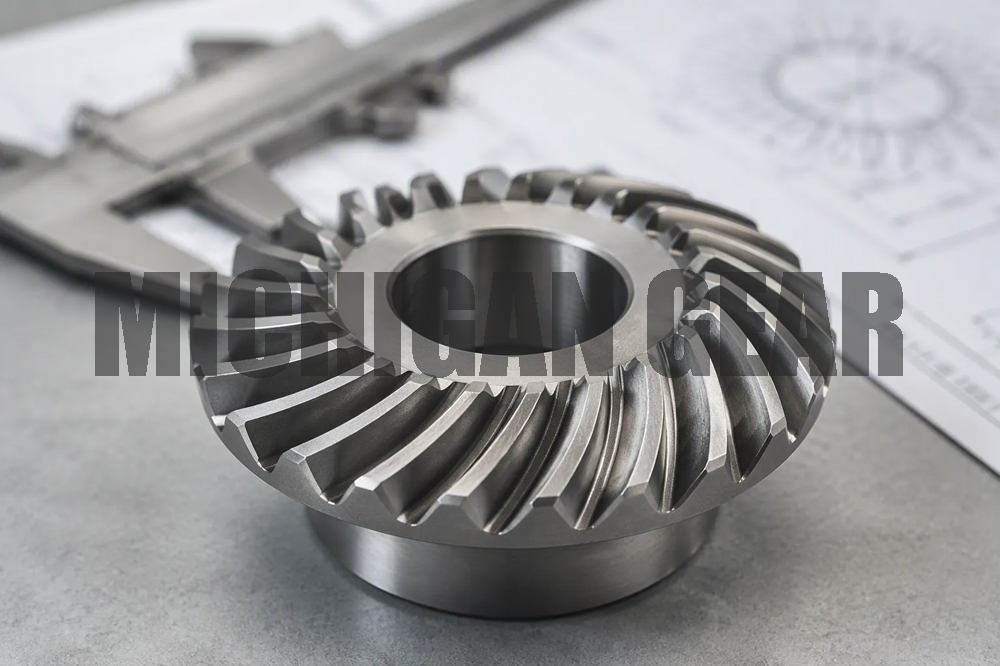
A reliable spiral bevel gear manufacturer meets three requirements. First, the supplier has the precision capability to hold tight tolerances. Second, the supplier provides complete documentation for every part. Third, matched-set integrity is guaranteed. Spiral bevel gears are unforgiving in OEM assemblies. Mating geometry, noise, and load distribution all depend on how well the pair works together. Treat spiral bevel gear supplier selection as a qualification process, not a price comparison. You will get a step-by-step framework: understand the component, compare gear types, verify process and material, check proof, then screen suppliers. These three pillars — precision, documentation, and matched-set integrity — guide every criterion in this article.
Key Takeaways
- Choose a manufacturer that provides lapping records and contact pattern reports for each gear pair.
- Verify that the supplier follows documented processes for cutting, heat treatment, and inspection.
- Check for current certifications like ISO 9001 or IATF 16949 and ask for audit records.
- Use a structured checklist to compare suppliers on design, precision, and cost control.
- Build a long-term partnership with a reliable supplier to ensure consistent OEM production.
What Is a Spiral Bevel Gear Manufacturer?
A spiral bevel gear manufacturer is a specialist supplier that designs, machines, and verifies bevel gear sets for power transmission. The engineering scope goes well beyond cutting teeth. It covers tooth geometry, contact pattern development, lapping, and final inspection against agreed quality standards. Bevel gear production demands advanced engineering expertise. You should therefore treat technical capability as your first screening criterion. A supplier without in-house engineering depth cannot control the variables that decide whether a gear set runs quietly and carries load evenly.
Role in OEM Supply
In an OEM supply chain, the manufacturer becomes an extension of your engineering team. The supplier must translate your drawings and load requirements into a producible gear set. That work includes selecting the gear type, defining the cutting method, and confirming the heat treatment route. A capable spiral bevel gear supplier also documents every decision. You receive material certificates, inspection reports, and process records with each shipment. This documentation protects your assembly line and supports your own traceability obligations. For spiral bevel gear OEM programs, the supplier’s engineering scope should match the criticality of the application.
Why Matched Sets Matter
Matched-set integrity separates a reliable supplier from a parts vendor. Spiral bevel gears must be lapped and supplied as mating pairs. Lapping develops the contact pattern that distributes load across the tooth surface. A single-gear inspection cannot prove this. You need proof that the pair was lapped together and tested as a unit. Ask for the lapping record and the contact pattern report for each set. Many suppliers offer custom lapped spiral bevel gears as a standard option. You can also request product documentation for custom spiral bevel gear sets before you place a production order. This evidence shows whether the supplier controls matched-set quality or merely inspects individual parts.
Spiral Bevel Gear Types and Application Fit
Bevel gears transmit power between shafts that meet at an angle, usually 90 degrees. The teeth sit on a cone-shaped body, so the mesh point moves along the face width as the gears turn. Common types include straight bevel, spiral bevel, hypoid, and worm gears. Each type suits a different mix of speed, load, noise, and mounting position. Confirm these basics before you commit to a manufacturer. A good supplier will help you match the type to your application, and that conversation often reveals whether the supplier understands your machine or only your drawing.
Where Spiral Bevels Fit Best
Spiral bevel gears shine in high-speed, high-load drives where quiet running matters. The curved teeth engage gradually, so several teeth share the load at once. This gradual engagement reduces noise and smooths torque delivery. You will find spiral bevel gears in vehicle differentials, industrial reducers, marine drives, and machine tool spindles. Any application with continuous operation and strict noise limits is a strong candidate.
Spiral bevel gears also fit assemblies where you need to adjust backlash and contact pattern after mounting. The curved tooth form tolerates small mounting shifts better than straight teeth. Share your load profile and duty cycle with the supplier early. That input shapes the custom spiral bevel gear set the supplier proposes, including the tooth form and the lapping plan.
When Other Gear Types Fit Better
Straight bevel gears suit low-speed, low-cost drives where noise is not critical. They cut easily and cost less, which fits simple hand-cranked or slow auxiliary equipment. Hypoid gears fit automotive axles where the pinion sits below the ring gear center. That offset lowers the vehicle floor and strengthens the drive. Worm gears fit high-ratio, compact packages such as conveyors and lifts, where a single stage must deliver a large speed reduction.
No single type wins everywhere. The right choice depends on your speed, load, ratio, mounting space, and noise target. Ask the supplier to walk through the trade-offs against your spiral bevel gear specifications. A manufacturer that builds several gear types can recommend the best fit without bias. That flexibility also helps during manufacturing ramp-up, when design changes are common.
Spiral Bevel Gear Manufacturing: Process and Material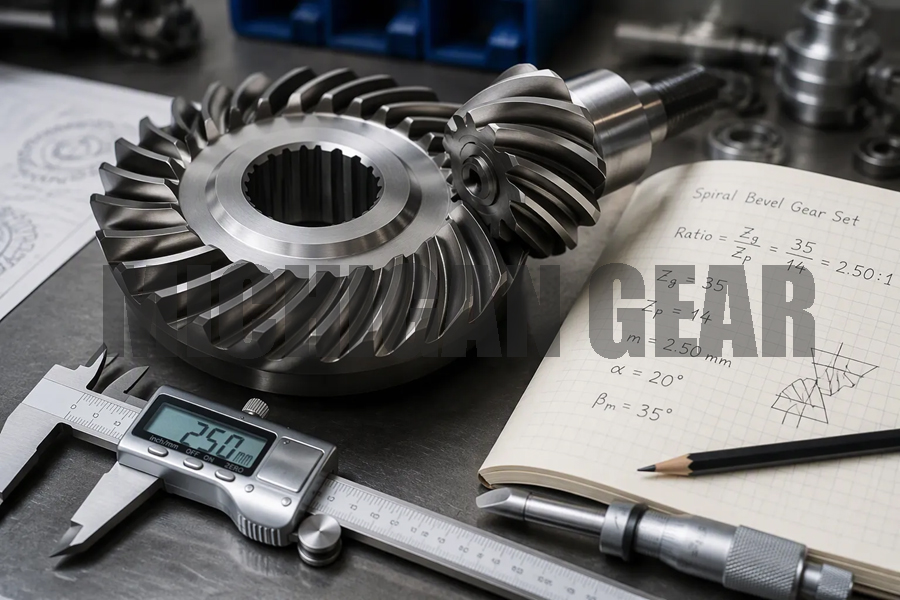
Spiral bevel gear manufacturing rewards close scrutiny. Process and material decide whether a gear set meets its print. You can review certificates all day. The real proof sits in how the teeth are cut and how the steel is treated.
Process Steps to Verify
Most spiral bevel gear manufacturing today relies on two cutting strategies. The five-cut method cuts each tooth flank in a series of separate passes. It gives the operator fine control over the tooth form. The trade-off is time: every extra pass adds cycle time and machine hours, so the method suits small batches and complex forms more than high-volume runs. The completing method cuts the tooth in fewer passes on a rigid machine. It shortens cycle time, yet it demands a stable setup and skilled operators, because a small error carries straight into the finished tooth. Ask which method fits your volume and your tooth form. The answer shapes both unit cost and lead time.
Ask the supplier which method it uses for your part and why. Then walk the verification sequence:
- Confirm the cutting method and the machine that will run your spiral bevel gear set.
- Review the lapping plan for each mating pair.
- Check the contact pattern report against your spiral bevel gear specifications.
- Review runout and backlash data from final quality inspection.
A manufacturer with strong manufacturing capabilities will answer with records, not assurances. Treat vague answers as a warning about spiral bevel gear production control. A serious shop also welcomes a plant visit, where you can watch a cut and inspect the lapping bench. Bring your own inspection tools and check a sample pair against the report.
Material and Heat Treatment
Material choice sets the ceiling on gear performance. Most spiral bevel gears use alloy steels selected for hardenability and core toughness. Hardenability means the steel hardens evenly through the section, not just at the surface. Core toughness keeps the tooth from cracking under shock loads. Spiral bevel gears with a weak core fail early, no matter how hard the surface reads.
Heat treatment turns that steel into a working gear. Case carburizing adds carbon to the surface and leaves the core softer. The result is a hard, wear-resistant flank backed by a tough core. Spiral bevel gears also demand tight distortion control during quenching, because warped teeth ruin the contact pattern you worked to build.
Verify the material certificate and the heat treatment record for each spiral bevel gear pair. Confirm the process against your agreed quality standards. Ask the supplier to show its documented procedures for heat treatment. A reliable spiral bevel gear manufacturer applies rigorous quality standards at every stage, from incoming steel to final lapping. Ask how the supplier handles a failed lot. A clear containment and rework path shows mature spiral bevel gear manufacturing discipline. For custom spiral bevel gear programs, request the heat treatment route in writing before you release the order. That document ties your spiral bevel gear specifications to the production steps that deliver them. Pair it with rigorous quality inspection at goods-in, and you close the loop between paper and part. Keep the records with the lot until the assembly ships.
Manufacturer Certifications and OEM Proof
Certifications That Matter
DIN Grade 5 gives you a concrete precision benchmark. This grade sets tight limits on tooth flank deviation and pitch error for spiral bevel gears. Ask the supplier to show inspection data against a named grade, not a vague claim of “high precision.” A manufacturer that quotes DIN Grade 5 in writing has committed to a checkable standard.
Certifications tell you how the supplier runs its quality system. Verify ISO 9001 as the baseline for any spiral bevel gear manufacturer. Look for IATF 16949 when your program serves automotive OEM customers. Both certificates should be current, and the scope must cover gear cutting and heat treatment. Confirm that the supplier audits against international quality standards on a fixed schedule. Certificates on the wall mean little without audit records behind them.
What Case Evidence Shows
Past performance predicts future reliability. Ask for a list of OEM clients and the countries they ship to. A supplier with delivery to OEM clients in more than 35 countries has proven it can meet varied quality standards across markets. Longevity adds weight. A manufacturer established in 1954 and focused on OEM work since 1962 has survived decades of spiral bevel gear manufacturing change. That history shows staying power.
Confirm application-specific performance guarantees for your spiral bevel gear OEM program. The supplier should back noise, load, and life targets in the contract, not just on a datasheet. Request references from programs similar to yours. Then call those references and ask about defect rates and response times. A strong spiral bevel gear supplier welcomes this scrutiny. Treat every claim as a question until the evidence answers it.
Evaluating a Reliable Spiral Bevel Gear Supplier
The OEM Assessment Checklist
You need a structured grid to compare candidates on equal terms. Build your supplier evaluation checklist around three columns: design, precision, and cost control. Score each candidate against the same criteria, and you will spot the most reliable manufacturer quickly.
| Category | What to Score | Evidence to Request |
|---|---|---|
| Design | In-house engineering depth, gear type recommendation, lapping plan | Drawing review notes, contact pattern development records |
| Precision | Stated grade, inspection method, matched-set testing | Inspection data against a named grade, lapping records |
| Cost control | Cycle time, scrap rate, rework policy | Quoted lead time, containment plan, pricing breakdown |
Score design first. A supplier that cannot explain its tooth form choices will struggle with your custom spiral bevel gear set. Score precision second. Demand inspection data against a named grade for every spiral bevel gear pair. Score cost control last. A low quote means little when rework and delays erase the savings.
Use the same grid for every candidate. This supplier qualification checklist turns a subjective comparison into a repeatable process. Precision bevel gear procurement rewards this discipline. You compare evidence, not sales claims.
Red Flags and Sourcing Logistics
Watch for these warning signs during your evaluation:
- Vague answers about cutting method or heat treatment route.
- No lapping records for mating pairs.
- Inspection reports that cover single gears only.
- Certificates without audit records behind them.
- Reluctance to share references or welcome a plant visit.
Any one of these signals deserves a follow-up question. Two or more together should end the conversation. A qualified spiral bevel gear supplier answers with documents, not assurances.
Sourcing logistics deserve equal attention. Confirm the shipping terms, packaging method, and spare-part policy before you sign. Ask how the supplier protects lapped pairs during transit. Matched sets must arrive as matched sets. Clarify the lead time for replacement pairs, because a lost or damaged gear stalls your line. Discuss the communication path for quality issues. A clear escalation route speeds up containment.
Review the supplier’s capacity against your forecast. A shop that runs near full capacity may struggle with your ramp-up. Ask about its plan for volume growth. Tie payment milestones to quality inspection results, so each shipment proves itself before you pay in full.
Finally, revisit the grid after the first production run. Compare promised performance with delivered performance. This habit builds reliability into the relationship and gives you data for the next order.
Precision, documentation, and matched-set integrity form the backbone of every supplier decision. Apply the assessment grid and checklist as a repeatable qualification process, not a one-time comparison. Each production run gives you fresh evidence about your spiral bevel gear supplier. Use the same grid for every candidate.
A reliable spiral bevel gear supplier earns trust over years, not orders. Build a long-term relationship with your spiral bevel gear manufacturer, and you secure consistent OEM production. Treat every audit and every lapped spiral bevel gear pair as proof. That discipline keeps your spiral bevel gears running quietly, and it turns a qualified supplier into a dependable partner.
FAQ
How do I confirm a supplier laps gears as matched pairs?
Ask for the lapping record and the contact pattern report for each set. A single-gear inspection report does not prove matched-set quality. Walk the lapping bench during a plant visit and check a sample pair against its report. A supplier that controls matched-set integrity shows you the evidence without hesitation.
Which quality standard should I name in the purchase order?
Name a checkable grade, such as DIN Grade 5, and require inspection data against it for every pair. Add ISO 9001 as the baseline system certificate. If your program serves automotive OEM customers, require IATF 16949 with a scope that covers gear cutting and heat treatment.
Does the cutting method affect my unit cost and lead time?
Yes. The five-cut method adds passes and machine hours, so it suits small batches and complex tooth forms. The completing method shortens cycle time but demands a stable setup. Ask which method fits your volume, then compare quotes on that basis. The answer shapes both cost and delivery.
What proof should I request before releasing a first order?
Request material certificates, the heat treatment route in writing, and inspection data against your named grade. Ask for OEM references in applications similar to yours. Confirm the performance guarantees in the contract. A reliable spiral bevel gear manufacturer answers with records, not assurances.
How do I protect lapped pairs during shipping and after delivery?
Confirm the packaging method protects each matched set in transit. Clarify the lead time for replacement pairs, because a damaged gear stalls your line. Agree on an escalation path for quality issues. Tie payment milestones to inspection results, so every shipment proves itself before you pay in full.
Post time: Nov-17-2026