


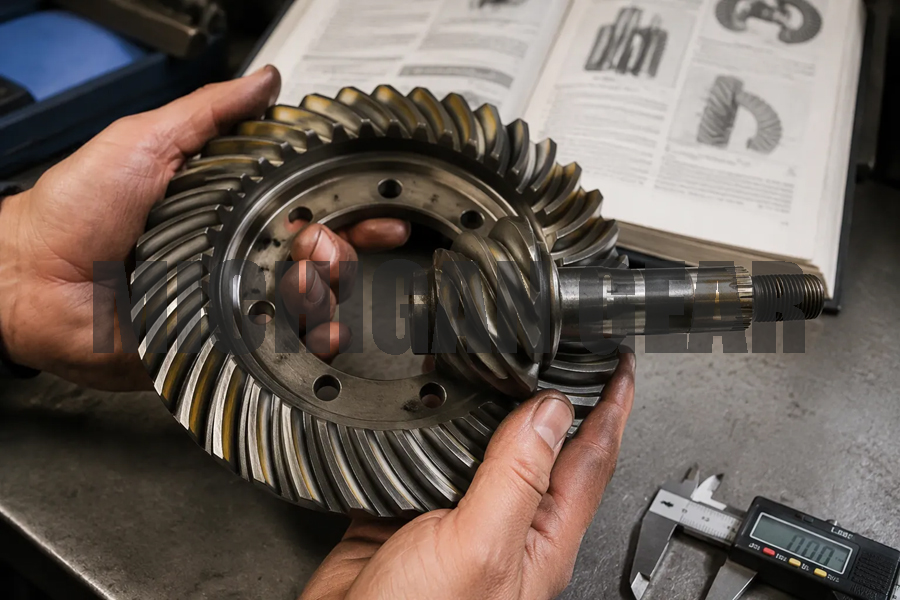
Spiral bevel gears come as matched sets because their cone shape and curved teeth need to fit together exactly. This pairing gives proper meshing, even load sharing, and quiet running. Each gear and pinion is lapped and tested together, so the two work as one unit, not as parts you can swap. Matched sets are normal for high-speed, high-load jobs where correct contact and backlash matter. As Hyforgings notes, a real matched gear pair has a set number for traceability. Mix parts from different sets, and you risk contact shift, noise, vibration, or early wear. That is why suppliers treat these bevel gear sets as a single bevel pair.
Key Takeaways
●Spiral bevel gears come as matched sets because their curved teeth must fit together exactly to run smoothly and quietly.
●Each gear and pinion are rubbed together to make a special contact pattern. This pattern makes sure the load is shared properly and the backlash is right.
●Matched sets make sure the gears work reliably in high-speed, high-load uses by keeping contact and backlash steady.
●Mixing parts from different sets can cause noise, vibration, and early wear, even if the parts look the same.
●For light-duty or non-critical drives, a single replacement may work. But matched sets give better long-term value for demanding jobs.
Why Spiral Bevel Gears Resist Interchangeability
Conical Shape and Curved Teeth of the Spiral Bevel Gear
A bevel gear looks like a cone with the top cut off. It moves force between two shafts that cross at a certain point. When you sort a bevel gear by its tooth path, a curved tooth path makes it a spiral bevel gear. That curve is why the part acts the way it does. The curved tooth lines raise the tooth contact ratio, so spiral bevel gears run better than standard bevel gears. They are also stronger, quieter, and shake less.
That same curve causes a problem for anyone who treats these parts as stock items. Each gear is cut to mesh with one certain pinion, the smaller member of the pair that usually drives the larger gear. The cone angle, the spiral angle, and the tooth trace all work as one. Change any one of them, and the teeth no longer meet the way the designer meant. The curve that gives the smooth, strong mesh also locks the two parts into a single relationship.
Not an Interchangeable Manufactured Pair
You might think a gear with the right tooth count and the right outside diameter will drop in as a replacement. That idea fails here. A spiral bevel gear is not an interchangeable manufactured pair with any pinion of similar size. Firgelli Automations points out that tooth system, module, mounting dimensions, and compatible mating geometry must all match. Pitch-cone calculations alone do not decide manufactured tooth compatibility or strength. Those calculations depend only on the ratio and axis geometry you enter. You still need module, face width, tooth system, and material to choose a real matched gear pair.
Handedness adds another layer. A usual external spiral bevel gear pair joins a right-hand member with a left-hand member. Opposite hands are needed, but they do not prove compatibility by themselves. Pairgears makes the point plainly: a right-hand 20-tooth pinion does not become compatible with every left-hand 40-tooth gear. Those counts suggest a 2:1 ratio, yet the rest of the geometry and mounting needs still have to match. Tooth-trace form is a separate detail. A similar-looking curve or the opposite hand does not identify a compatible mate.
So what really defines fit? Pairing does, not size. The matching of mating gear teeth depends on the intended mating geometry, the ratio, and the shaft arrangement. KHK’s catalog separates straight and spiral bevel products and supplies matched-pair and assembly guidance. That guidance covers mounting distance, shaft alignment, and gear-specific contact checks. A dimensionally correct gear from another set can pass every measurement you take with a caliper and still fail in service. The contact pattern will land in the wrong place, and the pair will not run as designed.
Lapping and the Matched Pinion
How Gear and Pinion Are Lapped Together
Lapping is a fine finishing step for bevel gears that work as a pair. After cutting and heat treatment, the gear and pinion turn together with an abrasive compound. A LinkedIn article on gear lapping explains the steps well:
- A special lapping machine and an abrasive compound are used. The compound holds tiny abrasive bits in oil or paste.
- The gear pair is mounted on the machine. It turns under controlled load and speed.
- The compound keeps flowing onto the tooth surfaces. Small flaws wear away, and the contact pattern gets better.
- A good machine setup keeps tooth contact steady and backlash stable. It also makes results repeatable.
As the teeth mesh again and again, tiny high spots wear down. The fit between the two gears gets better. Wenlio notes that lapping removes very little material. Its job is to improve contact, not to fix size. The supplier then inspects the set, marks it, and ships it as one unit. Belongear stresses that pair identity, mounting position, and backlash must hold up through assembly.
Contact Pattern Defines the Set
The finished contact pattern is like a signature for that exact set. Each spiral bevel gear has a pattern shaped by its own mate. Put in a different pinion, and the pattern moves. Research from ZHY Gear shows that axial positioning of both parts shifts the pattern along the tooth length. Apex separation changes where the load lands. That is why a substitute pinion cannot copy the original contact.
After lapping, the set goes through contact pattern checks and meshing inspection. Technicians check load distribution, backlash, and running performance. These gear-specific contact checks confirm the pair works as designed. Pairgears warns that mixing single gears from different sets can affect contact and noise. Keep the bevel pair together, and you keep the exact backlash settings and smooth mesh that lapping created.
What Matched Pairs Guarantee in Service
Backlash, Contact, and Load Sharing
Matched pairs are the best choice for high-speed, high-load jobs that need correct meshing. Belongear explains why: the pinion and gear depend on each other for tooth shape, mounting position, backlash, and contact pattern. Change one part, and you change how the whole mesh performs. A matched set locks these things together from the start, so the pair acts as one unit under load. That unity is what makes a drive reliable instead of one that drifts out of adjustment.
You also get load sharing you can predict. The lapped pattern spreads force across the full face of the teeth instead of piling it on one edge. Correct backlash settings keep tooth contact steady as the load goes up and down. Shaft alignment and mounting distance stay within the values the supplier checked, so the pair runs as designed. Each of these factors depends on the two parts staying together. Lose one, and the others shift with it.
Quiet, High-Load Performance
Spiral bevel gears run quieter and carry more load than straight bevel gears. Those traits fit high-speed and heavy-load working conditions, where a straight-tooth design would struggle. Chamolgear lists the reasons:
●The helical tooth trace removes impact during meshing, so operation is smoother and noise is lower.
●The teeth meet along a line rather than a point, which raises the number of teeth in mesh at once and improves tooth surface and root strength.
●The design must be manufactured, installed, and maintained as a set.
That last point matters most for you. The quiet, strong performance depends on proper tooth contact between the two parts. A matched set keeps the spiral bevel gear and its mate working along the same path the lapping process set. The meshing gear teeth stay in the zone the supplier checked, not in a new one. Keep the set together, and the spiral gears hold their smooth mesh through tough duty cycles. Separate them, and you lose the benefit the design was built to deliver.
Risks of Mixing Unmatched Components
Contact Shift, Noise, and Faster Wear
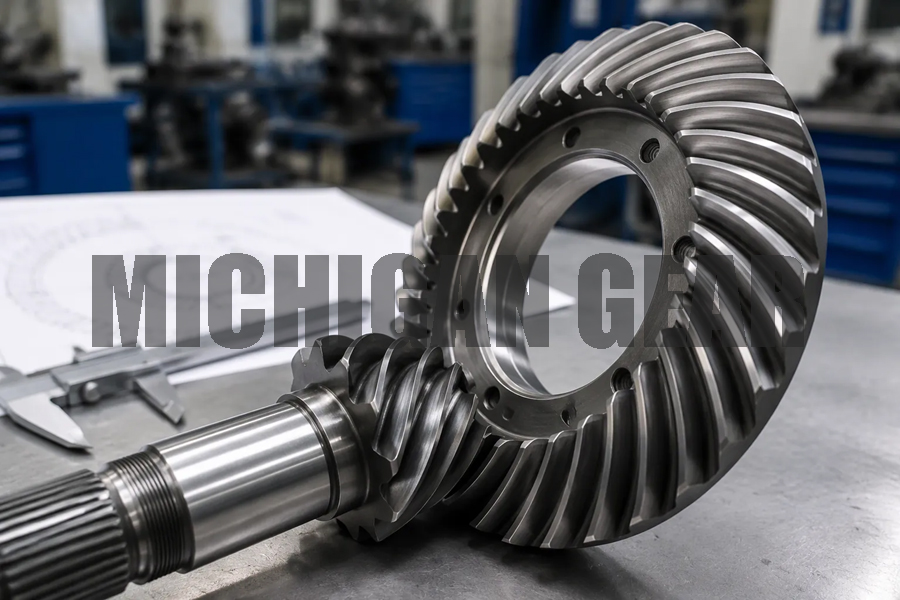
You can measure a gear with a caliper and read the tooth count, but still install a part that fails. Wenlio explains why. When you treat the ring and pinion as separate parts, small differences in geometry or mounting distance add up. Noise, poor contact patterns, and a shorter service life can then show up early in the field. Each gear may look fine on its own. Together, the two parts prove hard to adjust in the final housing.
Gear Technology puts the stakes plainly. The magazine warns that bevel gear systems are very sensitive to improper assembly. It also warns that slight errors in pinion or gear positioning can turn a well designed, quality manufactured gear set into a noisy, failure-prone weak link. A backlash reading inside tolerance can even mislead you. The pinion axial position error shifts the tooth contact location on the teeth. That shift may fall outside the adjustability range of the set, which Gear Technology describes as generally only a few thousandths of an inch. The result can be noise, vibration, and harshness, or even tooth failure under load.
If the backlash is insufficient, that same correctly made gear set will have tight spots… Under load, the gears will be noisy, vibrate and may run hot.
Lubrication makes the problem worse. Wenlio notes that offset geometry usually increases sliding, so the oil film has to do more work. A weak or contaminated film shows heat first, then surface distress and faster wear. Your unmatched spiral bevel gear pair may pass a bench check and still run hot in service.
When Individual Replacement Fits Best
Individual replacement has a real place. A low-speed, light-load, or non-critical drive can handle a single-component swap, especially when downtime matters more than perfect mesh. A matched set fits high-demand use instead. Follow the mating-pair guidance from your supplier when the application runs fast, carries heavy load, or cannot accept noise.
The choice comes down to matching. A matched bevel pair keeps the contact pattern, backlash, and load sharing the lapping process set. A single part cannot promise that. Weigh the duty cycle before you decide. For a critical spiral bevel gears drive, keep the set together. For a gentle application, a single replacement may serve you well.
A matched gear and pinion set keeps your drive working well. The supplier designs, laps, and checks the two parts as one unit. That pairing protects contact, backlash, and load sharing.
A single part may look cheaper at first. CM Gear notes that matched sets cost more to replace. But a lone part often gives weaker performance and needs replacing again. Hyforgings warns that swapping one part ruins the approved tooth contact pattern. This usually leads to faster wear, noise, and early failure.
Matched pairs remain the norm where durability and smooth running matter. For spiral bevel gears in light duty, a single replacement still works. Bevel gear sets built as one unit give lasting value.
FAQ
Can you replace just the pinion on a spiral bevel gear drive?
You can, but expect trade-offs. A lone part cannot copy the contact pattern that lapping created for the original pair. Your mesh may shift, run louder, and wear faster. Save a single swap for low-speed, light-load, or non-critical drives where downtime matters more than perfect fit.
How do you know a gear and its mate belong together?
Look for a set number or matching marks from the supplier. These tags tie the two parts to the same lapping run and inspection record. Keep that identity through assembly. Without it, you cannot confirm the pair still holds its checked backlash and tooth contact.
What happens if backlash is set wrong on a matched set?
Even a correct set can fail with poor adjustment. Too little backlash creates tight spots. Under load, the gears turn noisy, vibrate, and may run hot. Too much backlash lets contact wander. Always follow the supplier’s mounting distance and backlash values during installation.
Do matched sets cost more than buying one part?
Yes, a full set costs more upfront. But a lone replacement often delivers weaker performance and needs replacing again sooner. That repeat work adds up over time. Weigh the duty cycle first. For demanding drives, the matched pair usually gives better long-term value.
Are spiral bevel gears always sold in pairs?
Most suppliers ship them that way for demanding use. The two parts are cut, lapped, and checked as one unit, so they perform best together. Some low-demand applications accept a single replacement. Ask your supplier about mating-pair guidance before you order.
Post time: Nov-04-2026