


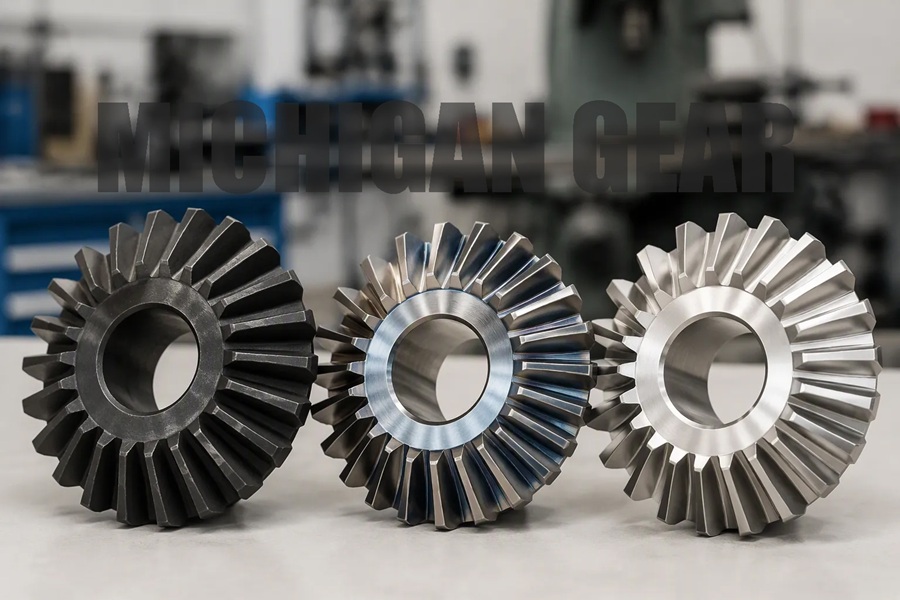
You need a miter gear that lasts, but which steel is right? I have faced this question many times. The best choice is a trade-off between strength, wear resistance, corrosion resistance, and cost.
Carbon steel offers low cost and good wear resistance, but limited corrosion protection. Alloy steel provides higher strength for heavy loads. Stainless steel resists corrosion well, but it typically works only for straight bevel gears and costs more.
This guide breaks down each material so you can match the gear to your load, speed, and environment.
Key Takeaways
- Carbon steel miter gears offer low cost and good wear for dry, light loads.
- Alloy steel miter gears handle heavy torque with heat treatment but need corrosion protection.
- Stainless steel miter gears resist rust and suit wet or sanitary environments.
- Select miter gear material by matching load, speed, moisture, and maintenance needs.
Miter Gear Steel Types Overview
I group miter gear steels into three families. Each family brings a distinct mix of machinability, strength, and corrosion protection. Understanding these differences helps you narrow your choice before you compare specific grades.
Carbon Steel Basics
Carbon steel contains iron and a small amount of carbon. This simple composition makes the material easy to machine. Shops cut carbon steel miter gear teeth quickly on standard equipment. The carbon content also delivers good wear resistance. Surfaces hold up well under repeated contact at lower speeds and torques.
I recommend carbon steel for light-duty power transmission. Examples include hand-cranked mechanisms, low-speed conveyors, and simple drive trains. These applications run in dry, protected spaces. Carbon steel performs well there at a low cost per part.
The main drawback is corrosion. Carbon steel rusts when moisture reaches the surface. You need paint, oil, or plating to protect the teeth and bore. Without that protection, the gear degrades fast in humid or wet conditions.
Alloy Steel and Stainless Steel Fundamentals
Alloy steel adds elements like chromium, nickel, or molybdenum to the iron-carbon mix. These additions raise strength and toughness beyond what plain carbon steel offers. Alloy steel also responds well to heat treatment. You can harden the teeth for higher load capacity. This makes alloy steel the right pick for heavy machinery, high-torque drives, and demanding industrial gearboxes.
Stainless steel contains a high chromium content. That chromium forms a passive oxide layer. The layer blocks rust and chemical attack. Stainless steel shines in food processing, marine equipment, and wash-down areas. It cuts maintenance costs in these critical settings.
Stainless steel has limits, though. Manufacturers typically use it for straight bevel gears rather than spiral types. It also costs more and offers lower strength than alloy steel. I weigh those trade-offs against the maintenance savings before I specify it.
Carbon Steel Miter Gear Benefits and Limits
Advantages: Machinability and Low Cost
I find carbon steel the easiest material to machine among all gear steels. Standard cutting tools handle it well. This keeps production costs low. Shops can produce gear teeth quickly without special equipment. The material also responds predictably to heat treatment. For example, a common grade like 20CrMnTi reaches a surface hardness of 58-62 HRC through gas carburizing. That hardness provides superior wear resistance for the teeth.
Carbon steel works best for lower speed, lower torque applications. I see it often in hand-cranked mechanisms. Light conveyors use it. Simple drive systems rely on it. The material performs well when loads stay moderate. The low cost per part makes it attractive for high-volume production. Replacement gears also cost less. This helps maintenance budgets stretch further.
The good wear resistance from carburizing extends service life significantly. Hardened surfaces resist pitting and scoring under normal operating conditions. I recommend carbon steel for any dry environment where loads remain predictable. One miter gear I selected for a small conveyor system ran for years without visible wear. It offered a practical balance of performance and economy.
Disadvantages: Corrosion Concerns
The main weakness of carbon steel is its poor corrosion resistance. Moisture causes rust quickly. The oxide layer that forms does not protect the metal. It flakes away and exposes fresh metal to more corrosion. This degrades the teeth and bore surfaces over time.
I address this limitation by using protective coatings. Paint works for basic protection. A layer of oil helps in enclosed gearboxes. Grease offers another solution for sealed systems. Plating provides a third option for exposed components. Each method adds cost and requires maintenance. Without that protection, a carbon steel gear fails fast in humid or wet environments.
The corrosion issue limits applications. I avoid carbon steel in food processing plants. I skip it in marine equipment. Outdoor machinery needs a different material. The low initial cost does not help if the gear corrodes within months. Operators must plan for regular inspection of protected surfaces. Any breach in the coating leads to rapid corrosion. I always weigh the savings against the ongoing protection costs before making a final choice.
Alloy Steel Miter Gear for Higher Loads
Strength and Heat Treatability
Alloy steel gives me a significant strength advantage over plain carbon steel. The added elements change the internal structure. This makes the material suitable for higher load applications. I choose alloy steel when a miter gear must handle heavy torque or repeated shock loads.
Chromium and molybdenum play key roles in this improvement. Chromium enhances oxidation resistance during carburizing. It also forms stable carbides that resist abrasive wear. Molybdenum secures hardenability in the carburized surface layer. This matters for large-section gears with slow cooling rates. Molybdenum also retards temper embrittlement and improves elevated-temperature strength.
| Alloying Element | Typical Content (wt%) | Role in Improving Gear Strength |
|---|---|---|
| Chromium (Cr) | 1.00–2.20 | Enhances oxidation resistance during carburizing; forms stable carbides that resist abrasive wear; contributes to hardenability |
| Molybdenum (Mo) | 0.20–1.10 | Secures hardenability in the carburized surface layer; retards temper embrittlement; improves elevated-temperature strength |
Heat treatment unlocks the full potential of alloy steel. I can harden the teeth through carburizing or nitriding. This creates a tough core with a wear-resistant surface. The result is a gear that handles high loads without cracking.
Corrosion Considerations
Alloy steel still requires protection against corrosion. The added chromium helps somewhat, but it does not make the material stainless. Moisture and chemicals will attack the surface without a barrier.
I use several methods to shield alloy steel gears. Electroplating, chemical plating, and physical vapor deposition create protective layers. Common coating materials include zinc, nickel, chromium, and their alloys. Chemical conversion coatings like phosphating and chromating also work well. These treatments react with the base metal to form a protective layer. They also improve adhesion for paints or lubricants.
Thermochemical processes offer another option. Carburizing, nitriding, and carbonitriding modify the surface composition. They diffuse carbon or nitrogen into the steel. This creates a hardened layer that also enhances corrosion protection. Specialized PVD coatings like Balinit C and Balinit DLC provide high hardness and anti-corrosion properties. Black oxide coating with oil post-treatment offers corrosion protection and improved lubricity.
Stainless Steel Miter Gear in Harsh Environments
Corrosion Resistance and Maintenance Reduction
I turn to stainless steel when moisture, chemicals, or sanitation rules the workspace. The high chromium content forms a passive oxide layer on the surface. This layer blocks rust and chemical attack. The protection renews itself if the surface gets scratched. That self-healing behavior sets stainless steel apart from coated carbon or alloy steel.
This corrosion resistance cuts maintenance work dramatically. Food processing plants wash equipment with water and cleaning agents every day. A carbon steel gear would rust within weeks in that setting. A stainless steel miter gear shrugs off the same exposure. Marine equipment faces salt spray and constant humidity. Stainless steel handles both without protective coatings. I have seen stainless gears run for years in wash-down areas with no visible corrosion. Operators save money on inspection, recoating, and replacement. The reduced downtime alone often justifies the higher purchase price.
Cost and Strength Trade-Offs
Stainless steel costs more than carbon or alloy steel. The raw material price runs higher. Machining also takes longer because the material work-hardens during cutting. These factors push the final part cost up. I weigh that premium against the maintenance savings before I specify stainless steel.
Strength is the other trade-off. Stainless steel offers lower strength than alloy steel. It also typically works only for straight bevel gears, not spiral types. That limits its use in high-torque applications. I choose stainless steel for moderate loads in corrosive settings. For heavy loads in dry environments, alloy steel remains the better pick. The decision comes down to the operating conditions. Moisture and sanitation push me toward stainless. High torque and dry air push me toward alloy or carbon steel.
Key Properties at a Glance
Mechanical Performance and Wear
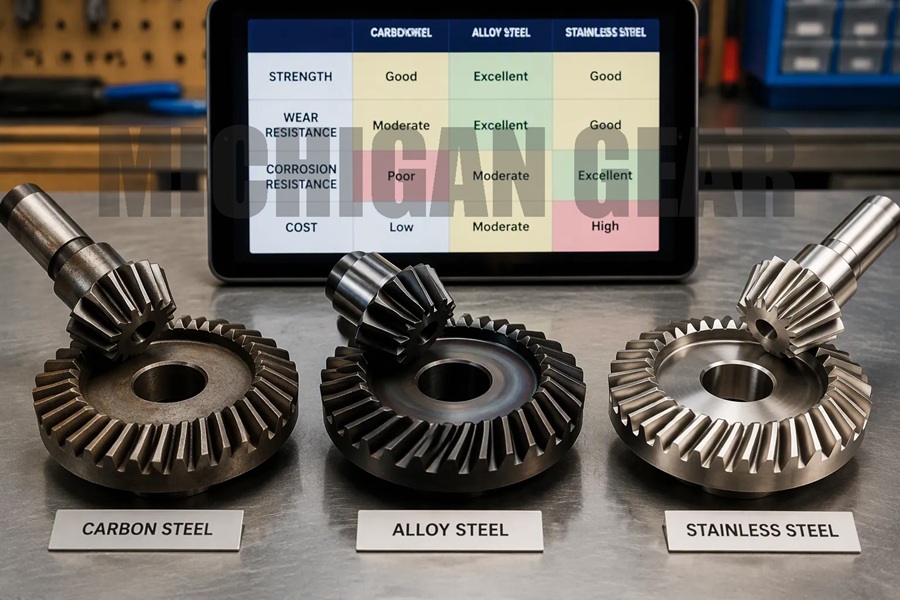
I compare the three steel families across four dimensions: mechanical performance, wear resistance, corrosion resistance, and cost. The table below summarizes what I have learned from years of specifying gears for different applications.
| Property | Carbon Steel | Alloy Steel | Stainless Steel |
|---|---|---|---|
| Strength | Moderate | High | Moderate to low |
| Wear resistance | Good (with carburizing) | Excellent (with heat treatment) | Moderate |
| Corrosion resistance | Poor | Poor to moderate | Excellent |
| Relative cost | Low | Moderate | High |
| Typical gear types | Almost all types | Almost all types | Straight bevel only |
Carbon steel alloys serve almost every gear type because of their machinability and wide availability. I can source them easily and machine them quickly. Alloy steel raises the bar on strength and toughness. Heat treatment pushes surface hardness to impressive levels. Stainless steel sits in the middle for mechanical performance. It resists wear adequately but cannot match the hardened surface of alloy steel under heavy contact stress.
Wear resistance depends heavily on heat treatment for carbon and alloy steels. Carburizing creates a hard case that fights pitting and scoring. Stainless steel work-hardens during machining, which complicates production but does not translate to better wear in service. I factor in the load profile and speed before I commit to any material.
Corrosion Resistance and Cost
Corrosion resistance separates these materials more sharply than any other property. Carbon steel rusts quickly when moisture reaches the surface. Alloy steel offers only marginal improvement. Stainless steel forms a passive oxide layer that blocks rust and chemical attack. That layer renews itself after scratches, which gives stainless steel a clear advantage in wet or sanitary environments.
Cost follows the opposite pattern. Carbon steel costs the least per part. Alloy steel sits in the middle. Stainless steel carries the highest price tag because of raw material costs and slower machining. I always weigh the upfront price against long-term maintenance expenses. A carbon steel miter gear needs protective coatings and regular inspection. A stainless steel gear avoids those ongoing costs in corrosive settings.
The decision rarely comes down to a single property. I look at the full picture. A dry, high-load application points me toward alloy steel. A low-speed, low-torque job in a protected space favors carbon steel. A wash-down area or marine environment demands stainless steel despite the premium. Each material earns its place when I match it to the right operating conditions.
Selecting Your Miter Gear Material
I base my material selection on four factors: operating speed, torque, environmental exposure, and maintenance expectations. Each input points toward a different steel family. When I select a miter gear for a new installation, I start with those four factors. I do not pick material in isolation. I match the gear to the machine’s real working conditions. The right choice balances upfront cost against long-term reliability.
For High-Load, Dry Environments
Dry environments favor carbon steel and alloy steel. Moisture does not threaten the gear, so corrosion resistance takes a back seat. The primary concern becomes strength and wear resistance.
I choose carbon steel for moderate loads and lower speeds. A hand-cranked positioner or a light conveyor system works well with a carburized carbon steel gear. The low cost per part keeps the project budget under control. I also appreciate the ease of sourcing. Carbon steel blanks ship quickly from most suppliers. Shops machine the teeth fast on standard equipment. This keeps lead times short and replacement costs low.
For heavy loads, I move to alloy steel. A gearbox in a metal forming press sees high torque and repeated shock. Alloy steel handles those forces without cracking. Heat treatment pushes surface hardness to 58-62 HRC or higher. That hard case resists pitting and scoring under heavy contact stress. The tough core absorbs impact loads without fracturing. I have seen alloy steel gears outlast carbon steel gears by two or three times in the same heavy-duty application.
I consider the operating speed in both cases. High-speed applications generate more heat and more contact stress. Alloy steel performs better there because of its heat treatability. Carbon steel works fine at lower speeds where thermal buildup stays minimal. Speed also affects lubrication selection, but that is a separate topic.
Maintenance expectations also influence my choice. In a dry environment, a carbon steel gear needs only periodic lubrication. I inspect the teeth for wear annually. An alloy steel gear in the same setting runs longer between replacements. The higher initial cost pays back through extended service intervals.
One example stands out. I specified an alloy steel gear for a heavy conveyor drive in a dry assembly plant. The gear ran eight hours per day for three years. I replaced it only because the customer wanted to upgrade the entire drive train. The teeth showed minimal wear at removal. That reliability justified the material choice.
For Corrosive or Sanitary Applications
Corrosive environments demand stainless steel. Moisture, chemicals, or wash-down routines destroy carbon steel and alloy steel within weeks. The protective coatings on those materials degrade over time. Stainless steel eliminates that problem entirely.
I turn to stainless steel in food processing plants. Equipment there gets hosed down with water and sanitizers every day. A carbon steel gear would rust immediately. Stainless steel forms a passive oxide layer that blocks attack. That layer heals itself after scratches. No painting, no plating, no oil baths required. The gear stays clean without extra effort.
Marine equipment presents the same challenge. Salt spray and constant humidity attack every exposed surface. Stainless steel handles that environment without additional protection. I have seen stainless gears run for years on boat lifts and dock equipment with no visible corrosion. The operator saves money on inspection and recoating.
The maintenance savings offset the higher purchase price. A stainless steel gear may cost two or three times more than a carbon steel gear. But the gear needs no inspection for rust. It requires no recoating. It does not cause unexpected downtime from corrosion failure. Over a five-year period, the total cost of ownership often favors stainless steel.
I acknowledge the limitations. Stainless steel offers lower strength than alloy steel. I only specify it for moderate torque applications. I also note that manufacturers typically produce stainless steel gears as straight bevel gears. Spiral bevel configurations in stainless steel remain uncommon. This limits the design options for some drivetrains.
I check the operating speed carefully. Stainless steel work-hardens during machining, which affects the final tooth geometry. I confirm that the gear supplier can hold the required tolerances at the intended speed. When speed and torque stay moderate, stainless steel delivers reliable service in the harshest environments.
I always return to one core trade-off: strength and cost versus corrosion resistance. Carbon and alloy steel deliver the strength and value that most dry, high-load jobs demand. Stainless steel costs more and offers less strength, but it earns its place when moisture or sanitation controls the environment.
I urge you to review your miter gear’s operating conditions – load, speed, exposure – then use the selection guide above to pick the material that keeps your machinery running reliably and economically.
FAQ
Which steel should I pick for a general-purpose miter gear?
I start with carbon steel for most dry, moderate-load jobs. It machines easily, resists wear after carburizing, and costs the least. I only move to alloy steel when torque runs high, and to stainless steel when moisture or wash-down routines dominate the workspace.
Does alloy steel resist rust on its own?
No. Alloy steel improves strength and hardenability, not corrosion protection. I still apply plating, phosphating, or a protective coating before I put an alloy gear into service. Without that barrier, moisture attacks the surface just as it does on plain carbon steel.
Why does stainless steel usually come as a straight bevel gear?
Manufacturers typically produce stainless steel in the straight bevel configuration. The material work-hardens during cutting, which complicates spiral tooth geometry. I accept that limit because stainless steel earns its place through corrosion resistance, not through high torque capacity.
Can I skip heat treatment on a carbon steel gear?
I do not recommend it for loaded applications. Carburizing pushes surface hardness into the 58-62 HRC range, which delivers the wear resistance carbon steel is known for. An untreated gear wears faster and pits sooner under repeated tooth contact.
Does a higher price always mean a better gear?
No. I match material to conditions, not to price. A stainless gear in a dry, high-torque drive wastes money and sacrifices strength. A carbon gear in a wash-down area fails from rust. The right miter gear balances load, speed, exposure, and maintenance expectations.
Post time: Sep-23-2026